The Journey of the Santo Niño
A sacred path across centuries and continents
From a medieval prison in Spain to a desert sanctuary in Mexico and a high-desert chapel in New Mexico, the Holy Child of Atocha has walked with the faithful for eight centuries. Scroll the road below and follow his journey.
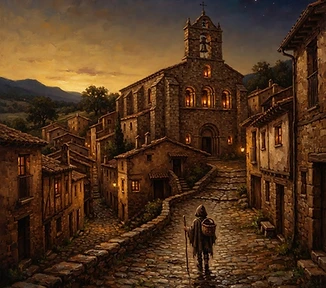
13th Century · Spain
Atocha, Spain
During the Moorish occupation of Spain, Christian prisoners in Atocha were starving, and only children were permitted to visit them. According to tradition, the Christ Child appeared as a small pilgrim boy, carrying a basket of bread and a gourd of water that never ran empty, feeding the prisoners when no one else could. Here, in a medieval Spanish town, the devotion to Santo Niño de Atocha was born.
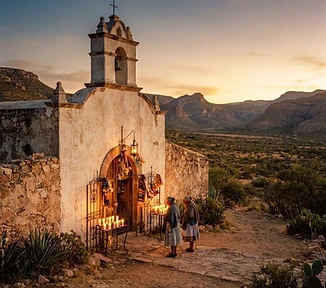
16th–17th Century · Mexico
Plateros, Zacatecas
Spanish missionaries carried the devotion across the ocean to the Americas. In the small mining village of Plateros, near Fresnillo, Zacatecas, the image of the Santo Niño de Atocha was enshrined. Over the centuries, countless miracles have been attributed to his intercession, making this sanctuary one of the most visited pilgrimage sites in all of Mexico.

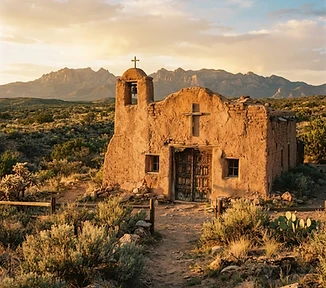
19th Century · United States
Chimayó, New Mexico
The devotion traveled north with Spanish colonists into what is now the American Southwest. In Chimayó, New Mexico, the Santo Niño de Atocha is venerated at El Santuario de Chimayó — one of the most important Catholic pilgrimage sites in the United States. The faithful walk for miles to this sacred place, just as the Holy Child once walked to feed the imprisoned.
Visit the Sanctuary
Santuario de Santo Niño de Atocha · Plateros, Fresnillo · Zacatecas, México
Open in Google Maps →Questions about this site? Contact:
pacebenepath@gmail.comThis sanctuary is an independent devotional project and is not affiliated with the physical Santuario de Santo Niño de Atocha in Plateros, Zacatecas, or any official diocese or parish.